





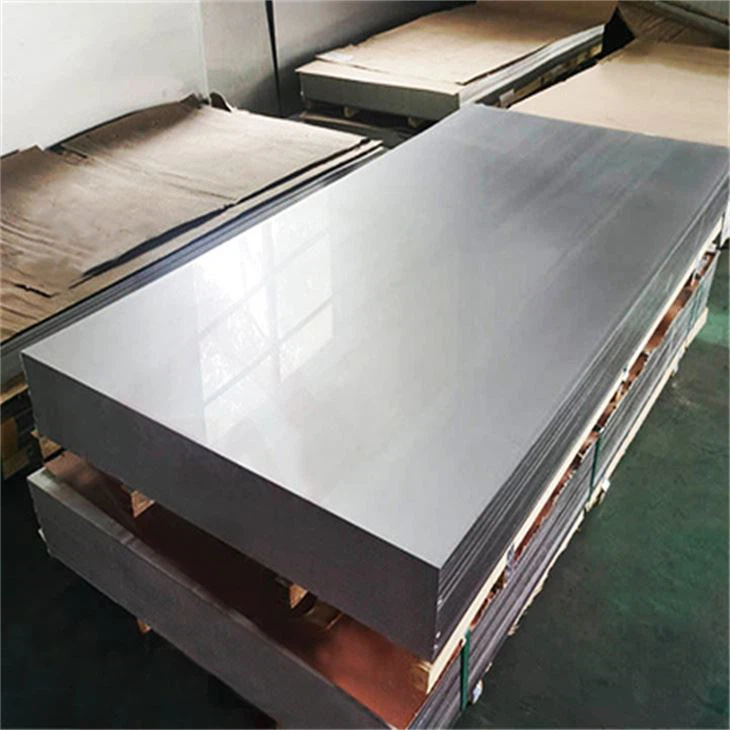
Hastelloy steel plates: the king of corrosion resistance, supporting the development of key industries.
Introduction
In modern industry, especially in harsh environments, the corrosion resistance of materials is a key factor determining equipment safety and service life. Hastelloy, as a significant member of the nickel-based alloy family, is renowned as the "King of Corrosion Resistance" due to its superior corrosion resistance, high-temperature strength, and machinability. Hastelloy Plates, as a primary form of material for manufacturing reactors, vessels, and lining structures, are playing an irreplaceable supporting role in the development of critical industries.
Hastelloy plate is also called C276 Hastelloy plate.
I. Chemical Properties and Corrosion Resistance Mechanism of Hastelloy
Hastelloy is not a single material, but a collective term for a series of high-nickel-based alloys. Its core component is nickel (Ni), and the desired properties are achieved by adding high proportions of elements such as chromium (Cr), molybdenum (Mo), and iron (Fe).
1. The Role of the Core Component
High-Nickel Matrix: Nickel provides excellent plasticity and toughness, which is fundamental to the alloy's resistance to reducing acid corrosion (such as hydrochloric acid and sulfuric acid).Chromium (Cr): Endows the alloy with excellent oxidation resistance, enabling it to form a dense, self-healing protective oxide film in oxidizing media (such as nitric acid and wet chlorine) and high-temperature environments.
Molybdenum (Mo): A key element in improving resistance to crevice corrosion and pitting corrosion, especially in chloride-containing environments.
2. Corrosion Resistance Mechanism
The corrosion resistance of Hastelloy alloys is mainly attributed to the formation of a stable passivation layer and resistance to grain boundary corrosion. By precisely controlling the carbon and silicon content and adding elements such as tungsten (W) for solid solution strengthening, Hastelloy plates can effectively avoid the precipitation of easily corroded carbides in the weld heat-affected zone (HAZ), thus maintaining structural integrity in extremely corrosive media.
II. Mainstream Grades and Key Applications
The most representative plate grades in the Hastelloy family are C-276, C-22, and B-3, which are optimized for different harsh environments.
| Brand | Features and main components | Typical application areas |
| C-276 | Ni-Cr-Mo-W series, low-carbon silicon. It has the strongest versatility and excellent resistance to both oxidizing and reducing corrosion. | Flue gas desulfurization (FGD) systems are used in environments containing a mixture of acids, including wet chlorine, hypochlorite, sulfuric acid, hydrochloric acid, phosphoric acid, and acetic acid. |
| C-22 | The Ni-Cr-Mo-Fe-W system has a higher chromium content. It has superior resistance to pitting and crevice corrosion, and is especially suitable for oxidizing environments. | Pharmaceutical reaction vessels, pesticide manufacturing, nuclear fuel reprocessing, and environments with high concentrations of chlorides. |
| B-3 | Ni-Mo system. Extremely resistant to strong reducing acids (such as hydrochloric acid and sulfuric acid of various concentrations). | Catalyst production, high-purity acid preparation, and acetic acid reactor. Strict avoidance of iron contamination is required. |
III. The Supporting Role of Hastelloy Steel Plates in Key Industries
The corrosion resistance of Hastelloy steel plates makes them a core material for driving the development of industries with high added value and high safety requirements.
1. Fine Chemical and Pharmaceutical Industries
In the production processes of pesticides, dyes, high-performance resins, and APIs (active pharmaceutical ingredients), highly corrosive media such as strong acids, strong alkalis, and halides are often used. Hastelloy steel plates are widely used in reactors, heat exchangers, storage tanks, and pipeline linings to ensure the continuity of production processes, product purity, and long-term operation of equipment, reducing the risk of production downtime and maintenance costs due to corrosion.
2. Environmental Engineering (Flue Gas Desulfurization)
Flue gas desulfurization (FGD) systems in thermal power plants and waste incineration plants are among the areas where steel faces the most severe corrosion challenges. The desulfurization towers operate in harsh environments with high temperature, high humidity, high chloride levels, and low pH values. Using C-276 or C-22 Hastelloy steel plates as linings in critical areas of absorption towers effectively resists corrosion from acidic condensate, providing crucial technical assurance for the long-term stable operation of environmental protection equipment.
3. Oil, Gas, and Nuclear Industries
In oil and gas extraction environments with high sulfur and chloride content, Hastelloy steel plates are used in the manufacture of deep well drilling equipment and acid gas treatment equipment. In the nuclear industry, grades such as C-22, due to their resistance to oxidizing media and complex acids, are used in nuclear fuel reprocessing and high-level radioactive waste treatment systems, serving as key materials for safe sealing and long-term storage.
Conclusion
Hastelloy steel plates, with their unique composition and unparalleled corrosion resistance, have become a key component of modern industrial equipment. They not only solve many engineering challenges but also significantly improve production efficiency and safety by extending equipment lifespan and reducing maintenance requirements. As industrial technology advances towards more extreme and refined directions, the application areas and importance of Hastelloy steel plates will continue to expand, living up to their reputation as the "King of Corrosion Resistance," and continuously supporting the high-quality development of key global industries.