







How are lifting chains classified?
Types of Lifting Chains
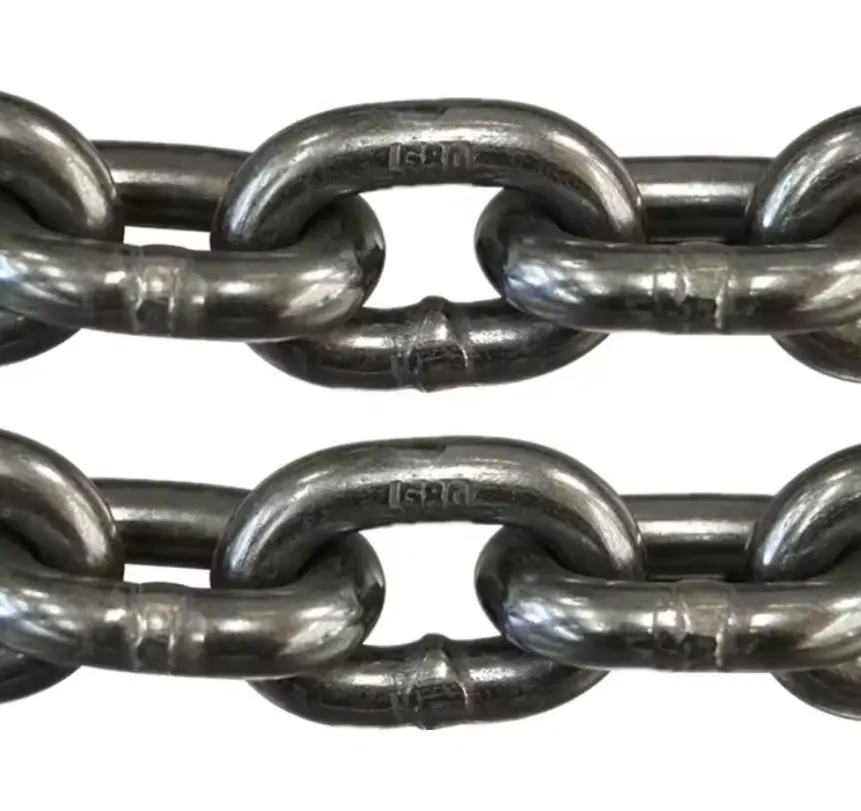
(1) Non-standard chains, also known as special-shaped chains, are chains that are not standard parts and are used for special mechanical gears. What are the similarities and differences between these chains and standard chains?
A. Similarities between non-standard and standard chains: They share the same quality and material, both made of alloy steel. Their functions are also the same, both providing transmission and traction between machines.
B. Differences between non-standard and standard chains: Standard chains are manufactured according to national dimensional standards and are suitable for use in a wide range of mechanical equipment. However, non-standard chains are manufactured outside of national standards and are generally custom-made for specialized mechanical equipment.
These are the similarities and differences between non-standard and standard chains. Users should be mindful when choosing a chain and select one suitable for the type of mechanical equipment used.
(2) Lifting chains, as lifting products, are widely used in various construction projects. So, what is the difference between lifting chains, which are used to lift goods, and hand chains?
Model: Hand chains have a diameter of 5 mm; lifting chains come in diameters of 6 mm, 8 mm, and 10 mm.
Appearance: Hand chains are galvanized and typically appear silvery white; lifting chains are typically dark brown and typically appear dark black.
Function: Hand chains drive the hand chain pulley to activate internal components, acting as a starter. Lifting chains transfer loads, acting as a conveyor.
The above comparison between lifting chains and hand chains will hopefully help you better understand lifting chains.
Chains are essential components in mechanical equipment. They are related to the daily production efficiency and work quality of the equipment. In addition, chain lubrication is also very important, but we cannot blindly apply all lubricating oils to the chains. We must lubricate the chains according to external conditions and occasions. When chains work together, we require the lubricating oil to be pure and free of impurities. Otherwise, the lubricating oil will cause granular impurities or corrosion on the surface of the chain, which will bring unnecessary trouble to the normal operation of the chain and make it unable to work normally, thereby reducing the work efficiency of the equipment. Therefore, we must pay attention to this in the daily maintenance of the chain.