




Foundation of Construction Safety: How to Correctly Select Steel Wire Ropes for Engineering and Lifting
I. Operating Condition Analysis: Determining Core Requirements
Before selecting wire ropes, a thorough analysis of the actual operating environment and mechanical characteristics is essential.
1. Load Characteristics and Safety Level
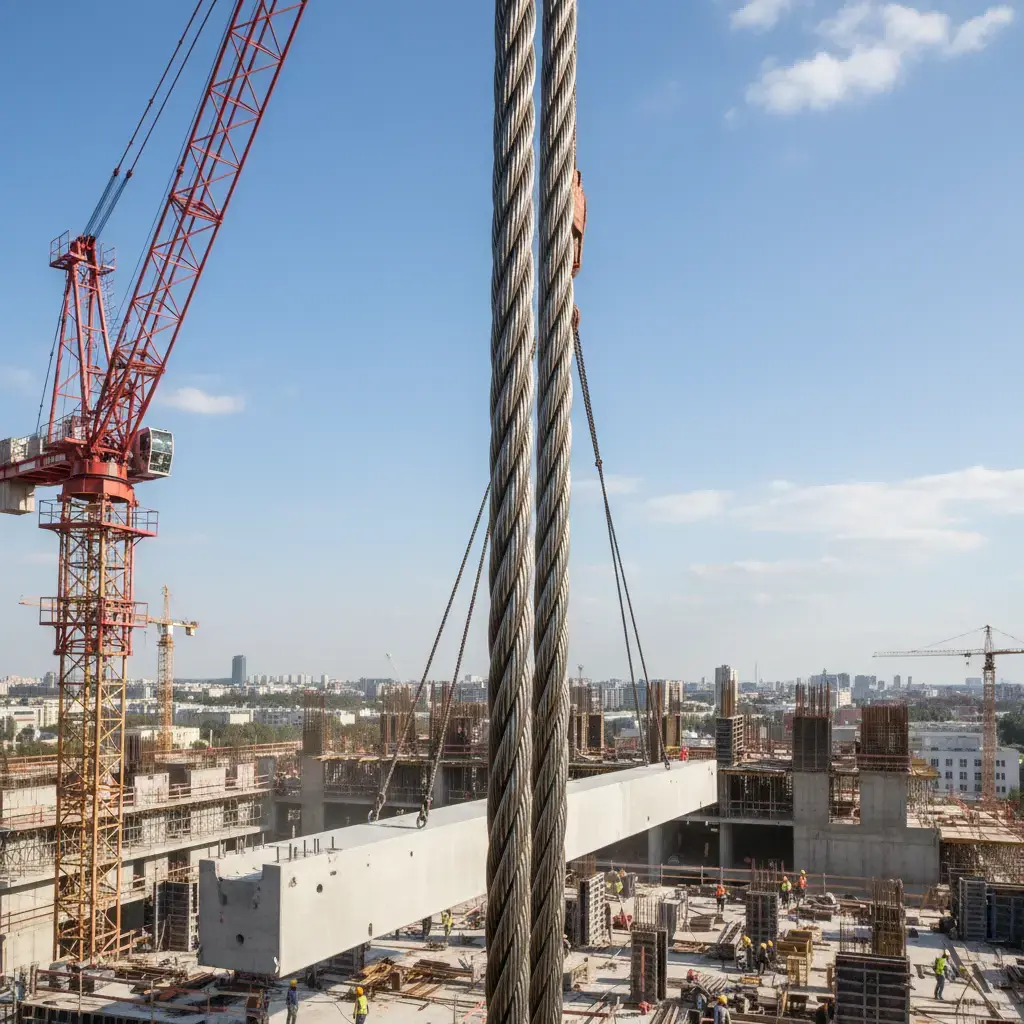
(1) Static Load vs. Dynamic Load: Structural cables typically bear static loads, requiring ropes with high elastic modulus and creep resistance; crane slings bear dynamic loads (start/stop, acceleration/deceleration), requiring ropes with excellent fatigue resistance.
(2) Safety Factor (SF): Strict adherence to national and industry standards is required. For example, the safety factor for wire ropes used in lifting equipment is typically between $4 and $8, while the safety factor for ropes used in personnel-carrying equipment requires even higher values.
2. Environmental Factors
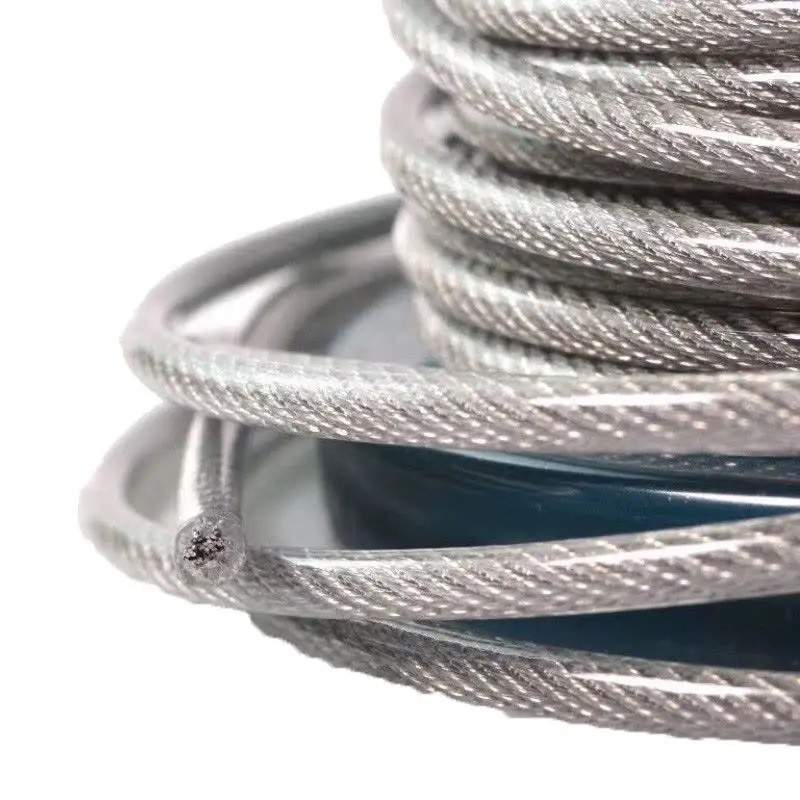
(1) Corrosion: In humid, coastal, or heavily polluted industrial areas, galvanized or plastic-coated wire ropes must be selected to enhance their corrosion resistance. (2) Temperature: In high-temperature environments (such as areas near heat sources), **integrated steel core (IWRC)** wire ropes should be selected to prevent the fiber core (FC) from aging or carbonizing due to heat.
(3) Wear and Compression: Parts that frequently come into contact with guide wheels, drums, or structures require structures with high wear resistance.
3. Winding and Bending Fatigue
(1) Drum to Pulley Diameter Ratio (D/d): This is a key parameter determining the lifespan of the wire rope.
(2) "D" is the diameter of the drum or pulley.
(3) "d" is the nominal diameter of the wire rope.
(4) The larger this ratio (generally required to be D/d ≥ 20), the lower the bending stress on the wire rope and the longer its lifespan. For applications involving frequent bending, structures with better flexibility should be selected.
II. Quantitative Selection of Technical Parameters.
Correct selection involves precise matching of parameters, rather than blindly pursuing high strength.
1. Structural Selection: Balancing Flexibility and Abrasion Resistance
| Structure type | Features | Applicable working conditions |
| 6x7 | It has the best wear resistance and is resistant to compression, but has poor flexibility. | Cableways, bridge cables, and fixed ropes are used in situations where bending requirements are not high. |
| 6x19 (FW/Seale) | It boasts excellent overall performance, is the most widely used, and balances strength and flexibility. | General-purpose cranes, hoists, and excavators, with medium bending frequencies. |
| 6x37 | It has high flexibility and good fatigue resistance, but slightly lower wear resistance. | Winches and marine cranes that require frequent winding and bending. |
| Anti-rotation rope (e.g., 18x7, 35x7) | It has excellent torsional resistance, effectively preventing the rotation of the suspended object during single-rope hoisting. | High-lift, single-rope or multi-layer winding tower cranes and mobile cranes. |
2. Determining the Rope Core Type
Fiber Core (FC): Lower price, good flexibility, can store lubricating oil; however, slightly lower strength, not resistant to high temperatures, and easily deformed by compression. Suitable for low-load or high-flexibility applications.
Independent Wire Rope Core (IWRC): High strength (approximately 10% higher than FC), stable structure, good resistance to compression and heat resistance. Suitable for high-load, multi-layer winding cranes.
3. Laying Method and Direction
Regular Lay: Most commonly used, stable rope structure, not easily unraveling, good anti-rotation properties. Suitable for most lifting equipment.
Lang's Lay (Same Direction): Larger contact area, better wear resistance and bending fatigue resistance than regular lay, but poor anti-rotation properties, requiring anti-rotation measures. Suitable for drum winding and equipment with extremely high wear resistance requirements.
4. Minimum Breaking Strength (MBL)
Calculate the required minimum breaking strength based on the maximum working load (WLL) and the specified safety factor (SF):
MBL ≥ WLL ≥ SF
Always refer to the nominal tensile strength (e.g., 1770 MPa or 1960 MPa) and nominal diameter provided by the wire rope manufacturer to check or calculate the rope's minimum breaking strength to ensure it meets the safety margin.
III. Quality and Certification Standards.
Correct selection also means quality control.
1. Standard Compliance
Construction wire ropes must comply with the relevant national or international standards, such as:
National Standard (GB): e.g., GB/T 20118 (General Purpose Wire Ropes).
International Standard (ISO): e.g., ISO 2408.
Industry Standard: e.g., Crane Industry (JB/T 8903).
2. Lubrication and Maintenance.
Select wire ropes that have been adequately lubricated at the factory. For bright wire ropes, ensure that the lubricating grease used meets environmental requirements and develop a detailed in-service lubrication and inspection plan. Lubricant not only reduces friction and improves fatigue life but is also crucial for preventing corrosion of the rope core and internal wires.
3. Rigging and End Treatment.
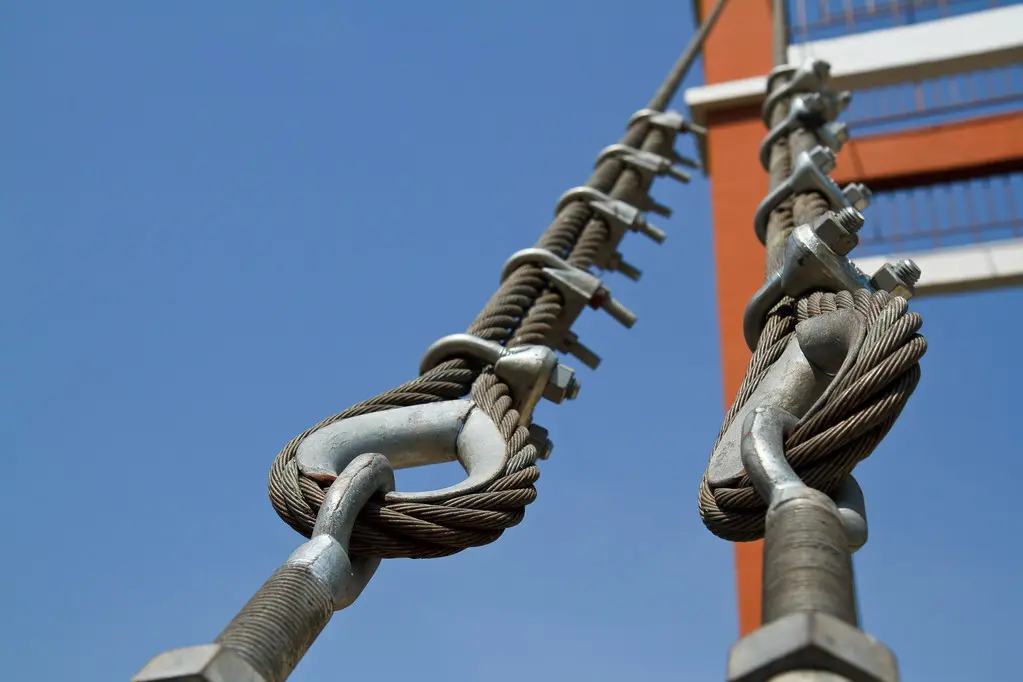
For wire rope rigging used in hoisting, the quality and workmanship of its end treatments (such as crimped joints and spliced joints) are critical. It must be ensured that the efficiency coefficient of the joints is not lower than the specification requirements and that the work is performed by a qualified professional organization.