






Stainless steel pipe: a key engineering material with superior performance and wide applications
Stainless steel pipe is a hollow long steel strip with the following characteristics:
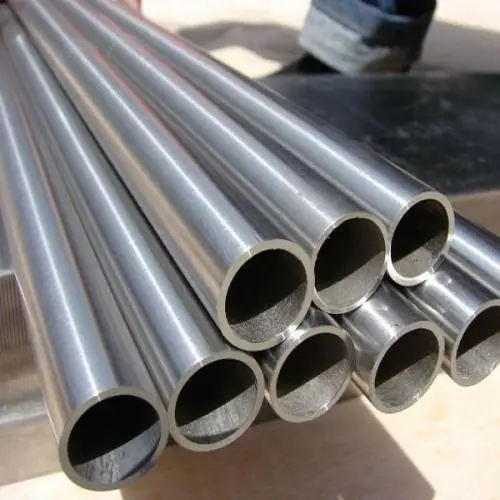
Stainless steel pipe is a corrosion-resistant alloy steel pipe made primarily of iron, chromium, and nickel, with controlled proportions of these elements. Due to its unique microstructure and macroscopic physicochemical properties, stainless steel pipe has become an indispensable key engineering material in modern industry, infrastructure construction, and high-end manufacturing.
This article will delve into the core characteristics of stainless steel pipe from a materials science perspective and systematically review its technological advantages and specific applications in major fields.
I. Microscopic Mechanism and Core Characteristics of Stainless Steel Pipe The superior performance of stainless steel pipe mainly stems from the passivation film formed on its surface. This mechanism is a natural consequence of high chromium content (typically greater than 10.5%)
1. Excellent Corrosion Resistance
1.1 Passivation Mechanism:
In an oxygen-rich environment, the chromium on the surface of the stainless steel pipe reacts rapidly with oxygen, generating a chromium-rich oxide film (mainly Cr2O3) with a thickness of approximately 1-3 nm. This passivation film has a dense structure and stable chemical properties, completely isolating the steel substrate from external corrosive media. 1.2 Resistance to Pitting and Crevice Corrosion:
In corrosive environments containing chloride ions (Cl-), the corrosion resistance of standard austenitic stainless steels (such as 304) is challenged. By adding molybdenum, such as in grades 316/316L, molybdenum effectively increases the Pitting Resistance Equivalent Number (PREN), enhancing the stability and self-healing ability of the passivation film, thus significantly resisting pitting and crevice corrosion.
PREN = %Cr + 3.3x%Mo + 16x%N
2. Excellent Mechanical Properties
2.1 High Strength and Plasticity:
Stainless steel pipes, especially austenitic stainless steels (such as 304), possess excellent cold-working properties and high strength. They exhibit high yield strength and excellent elongation at room temperature, enabling them to withstand high-pressure fluid transport and complex structural stresses.
2.2 Low-Temperature Toughness:
The crystal structure of austenitic stainless steel does not undergo martensitic phase transformation under extremely low temperatures, thus maintaining excellent low-temperature impact toughness. This is crucial for cryogenic engineering applications such as liquefied natural gas (LNG).
3. Excellent High-Temperature Resistance
3.1 Oxidation Resistance:
Under high-temperature environments, the chromium-rich oxide film formed on the surface of stainless steel exhibits good thermal stability, effectively inhibiting high-temperature oxidation of the steel substrate (formation of iron oxides).
3.2 Creep Resistance:
High-grade grades (such as 321 and 310S) with added nickel (Ni) and small amounts of rare elements (such as Ti and Nb) possess stronger **creep resistance** under long-term, constant-stress, high-temperature conditions, ensuring the structural integrity of high-temperature furnace tubes and heat exchangers.
II. Main Applications and Technical Advantages of Stainless Steel Pipes in Various Industries
The application of stainless steel pipes is based on matching its unique properties with the stringent standards of specific industries.
1. Petrochemical, Chemical, and Energy Industries (API & ASME Standards)
1.1 Applications:
Transporting high-pressure, high-temperature, and highly corrosive (acids, alkalis, halides) fluids; used in process pipelines, heat exchanger tubes, and furnace tubes in refineries and chemical plants.
1.2 Technical Advantages:
For high-temperature, high-pressure, and sulfide stress corrosion protection, high-nickel austenitic stainless steel (such as 321, 347) or super austenitic stainless steel (such as 904L, 254SMO) is typically used to ensure safety under extreme conditions and long-term operational reliability.
2. Food, Pharmaceutical, and Bioengineering Industries (GMP & FDA Standards)
2.1 Applications:
Clean steam piping, purified water (PW) and water for injection (WFI) pipelines, CIP/SIP (clean-in-place/sterilize-in-place) systems, reactor and fermentation tank piping.
2.2 Technical Advantages:
Strict requirements for the use of sanitary-grade Stainless Steel Tubing. The inner wall of this type of pipe must undergo mechanical or electrochemical polishing to achieve a mirror finish. The purpose is to minimize fluid stagnation and microbial adhesion, meeting the highest hygiene standards of sterility and non-contamination.
3. Building and Infrastructure Sector (ASTM & GB Standards)
3.1 Applications:
Urban water supply trunk lines and indoor water supply pipes (replacing traditional galvanized pipes), bridge structural support, building curtain walls, public facility railings and decoration.
3.2 Technical Advantages:
Long lifespan, low maintenance costs, and no leaching of harmful substances. Stainless steel water pipes are considered a green and healthy water supply material; their corrosion resistance ensures the purity of the transported water, meeting drinking water health standards.
4. Automotive and Transportation Sector
4.1 Applications:
Automotive exhaust system piping (especially in high-temperature areas), fuel lines, brake lines.
4.2 Technical Advantages:
Resistance to high-temperature oxidation and stress corrosion. Automotive exhaust pipes typically use ferritic stainless steel (such as 409L) or heat-resistant stainless steel to withstand the high temperatures and corrosiveness of engine exhaust gases.
In summary:
The superiority of stainless steel pipes rests on precise alloy proportions and advanced manufacturing processes. From high-pressure refining to extremely clean pharmaceutical environments, stainless steel pipes, with their excellent corrosion resistance, mechanical strength, and hygienic properties, have become an irreplaceable high-performance piping material in modern engineering, continuously driving the upgrading and development of industry and infrastructure.