






Stainless Steel Channel Steel Properties and Application Selection Guide
Stainless Steel Channels are widely used in many fields due to their excellent corrosion resistance, high strength, good processability and aesthetics. The following are the main uses of stainless steel channels:
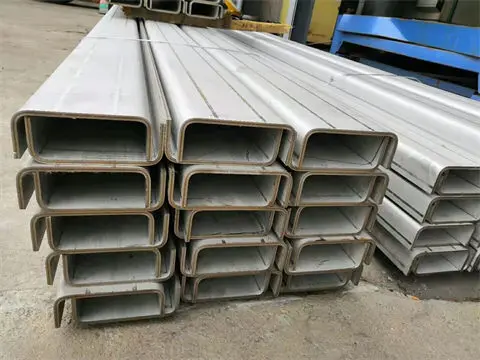
Stainless steel channel steel is a typical structural steel section with a unique "U" or "C" shaped cross-section. It is widely used in engineering fields requiring simultaneous structural support, high load-bearing capacity, and excellent corrosion resistance. Its superior performance makes it an ideal alternative to ordinary carbon steel channel steel in harsh environments.
This article aims to professionally analyze the core characteristics of stainless steel channel steel and the applicability of mainstream grades from the perspectives of materials science and structural engineering, and provides selection guidance based on specific environmental and mechanical requirements.
I. Core Characteristics and Mechanical Advantages of Stainless Steel Channel Steel
The adoption of stainless steel channel steel in critical engineering projects is due to its combination of structural mechanical efficiency and chemical inertness.
1.1. Excellent Corrosion Resistance
The core advantage of stainless steel lies in the chromium-rich passivation film (Cr₂O₃) that forms on its surface. This film possesses extremely strong self-healing capabilities and chemical stability, making it stable in water, air, and various chemical media.
Atmospheric Corrosion Resistance: Suitable for outdoor, humid, or coastal environments.
Chemical Resistance: Highly resistant to dilute acids, alkaline solutions, and salt solutions. Precise matching based on the chromium, nickel, and molybdenum content of the grade is necessary during selection.
1.2. Structural Efficiency and Mechanical Properties
The geometry of channel steel gives it excellent bending resistance and section modulus.
High Strength and Toughness: Stainless steel, especially austenitic and duplex stainless steels, typically exhibits higher yield strength and tensile strength, as well as better ductility and low-temperature toughness.
Work Hardening Characteristics: Austenitic stainless steels (such as SS304 and SS316) undergo significant work hardening during cold working, which helps improve their local load-bearing capacity.
Resistance to Thermal Expansion: Austenitic stainless steel has a relatively high coefficient of thermal expansion. When designing structures for high-temperature applications or with large temperature variations, thermal stress must be accurately considered.
1.3. Cleanliness and Sanitary Requirements
Stainless steel has a smooth surface, is not easily adhered to, and is easy to clean and disinfect, making it the preferred material for sanitary applications such as food processing, pharmaceutical manufacturing, and water treatment.
II. Commonly Used Stainless Steel Grades and Selection Principles
The selection of stainless steel channel steel is mainly based on the severity of the corrosive environment, especially the chloride concentration, temperature, and pH value.
Selection Principles:
2.1 Determine Corrosion Grade: If chloride ions are present in the environment (e.g., seawater, de-icing salt), molybdenum-containing 316 or duplex stainless steel must be selected.
2.2 Welding Requirements: For structures requiring extensive welding, low-carbon grades (L grade, such as 304L, 316L) should be preferred to avoid the formation of chromium carbide in the weld heat-affected zone (HAZ), which can lead to intergranular corrosion.
III. Main Application Areas of Stainless Steel Channel Steel
The structural advantages and material properties of stainless steel channel steel make it suitable for a variety of critical engineering scenarios:
3.1. Building and Infrastructure
Curtain Wall Support Systems: As a secondary load-bearing framework for glass curtain walls or exterior wall panels, it provides high-strength support while ensuring the long-term weather resistance of exposed components.
Decorative and Structural Exposure: In modern architectural design, it is used for bridge railings, sidewalk supports, and structural frames requiring durability and aesthetics.
3.2. Chemical and Petrochemical Industries
Equipment Bases and Brackets: Used to support critical equipment such as reactors, pumps, pipelines, and towers, especially in environments with a risk of acid, alkali, or halide vapor leakage.
Pipe Galleries and Guide Rails: In the support structure of pipelines transmitting corrosive media, it prevents structural failure due to corrosion, thus preventing significant safety hazards.
3.3. Marine and Water Treatment Engineering
Seawater desalination and wastewater treatment: SS316 channel steel, due to its excellent resistance to chloride corrosion, is the standard material for support and flow guidance systems in pump stations, filtration tanks, and aeration tanks.
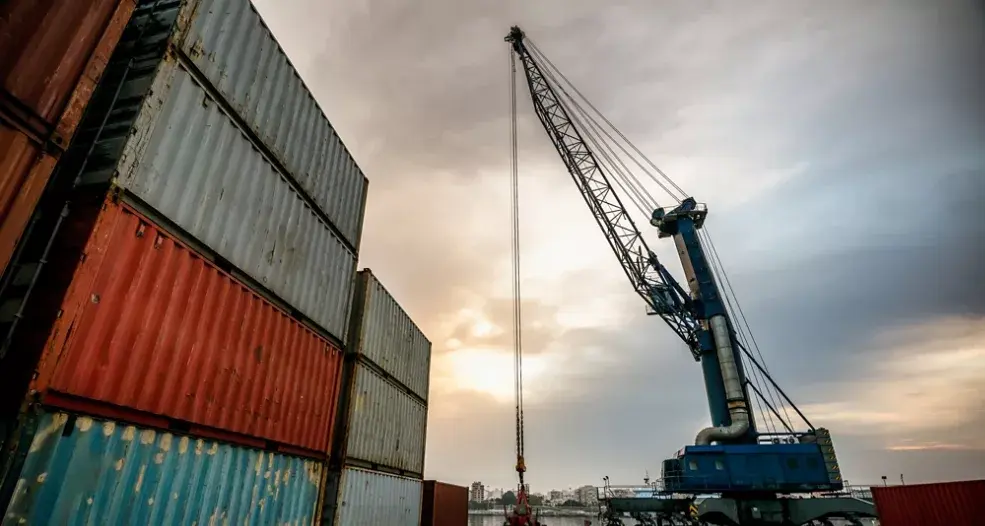
Ships and port facilities: Used for supporting the internal structure of ships, dock boarding points, or deck equipment to resist high salt spray and seawater corrosion.
IV. Professional Guidance in Manufacturing and Construction
The processing and installation of stainless steel channel steel must follow specific procedures to maintain its inherent corrosion resistance.
4.1 Prevention of Carbon Steel Contamination
Tool Isolation: Cutting, grinding, and welding of stainless steel must be done using dedicated and clean tools (such as grinding wheels, wire brushes, and clamps). It is strictly forbidden to use tools interchangeably with carbon steel tools to prevent carbon steel particles from embedding into the stainless steel surface, creating a potential galvanic corrosion hazard.
Surface Cleaning: After processing, a pickling and passivation solution or a dedicated stainless steel cleaner must be used to thoroughly remove residual iron ions or oxides from the surface, restoring the integrity of the passivation film.
4.2 Welding Requirements
Selection of Matching Welding Consumables: Welding consumables that match or exceed the grade of the base material must be selected (e.g., 308 welding wire can be used for welding 304 channel steel).
Heat Input Control: Low heat input welding techniques should be employed, especially when welding stainless steels beyond grade L, to minimize chromium carbide deposition and reduce susceptibility to intergranular corrosion.
Post-Weld Treatment: Welds subjected to critical loads or exposed to corrosive environments must undergo post-weld pickling and passivation to eliminate oxide discoloration and chromium-depleted zones generated during welding.
Conclusion:
The selection of stainless steel channel steel involves a comprehensive consideration of structural strength, chemical stability, and economy. Engineers should accurately assess the corrosion level of the application environment, primarily based on chloride concentration, and select appropriate grades such as 304, 316, or duplex stainless steel. During the construction phase, strict adherence to contamination-free processing and post-weld passivation procedures is crucial to ensuring that stainless steel channel steel structures reach their designed service life.